

The Ministry of Education gets the biggest slice of the budget pie again in Belanjawan 2027. Every year, the government puts more money into education. It shows that education remains a national priority. But where exactly is the money going? Let’s break it down.
Spending more on education is good. Spending that money well is even better.
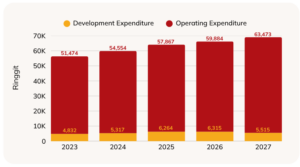 MOE gets RM68.99 billion in Belanjawan 2027, a 4.2% increase from the previous year and about 15% of the entire federal budget. Year after year, the allocation keeps growing. But more money doesn’t automatically translate into better outcomes.
A huge chunk of MOE’s budget goes to emoluments, which are mostly salaries for teachers and other ministry staff. With around 428,000 teachers alone, that’s naturally a big part of the bill: RM50.34 billion, or almost 73% of MOE’s entire budget.
Meanwhile, development expenditure has fallen from 9.54% to 7.99% of MOE’s budget. So, while we’re spending more overall, a smaller share goes to development projects. With almost three-quarters of the budget going to business-as-usual operations, are we investing enough and in the right areas to develop and transform our education system?
In previous years, several development projects have seen noticeable deviations between their original allocations, revised budgets and actual expenditure, with instances of both underspending and overspending. These deviations may be justified. However, without visibility into why they occur, it is difficult to assess their impact on project delivery, timelines and quality.
Hence, the government’s commitment to greater transparency under the new Government Procurement Act is a welcome step. As the Prime Minister announced during his Belanjawan 2027 speech, the government will publicly disclose project information, including the contractors involved and contract values, when the Act comes into force in 2027.
Basic education assistance amidst cost of living pressures
Bantuan Awal Persekolahan
Bantuan Awal Persekolahan (BAP), or Early Schooling Aid, will increase from RM150 to RM200 per student in 2027, with RM1 billion allocated to help 5.3 million students. Got three kids in school? That’s RM600 in total for the family. Not bad, especially when you’re buying uniforms, shoes, bags and stationery — and somehow everything needs replacing at the same time.
BAP will be distributed through schools so parents and teachers can meet and build a sense of partnership and shared responsibility for a child’s academic progress and character development. The money is distributed as cash or credited to the student’s, parent’s, or legal guardian’s bank account.
Rancangan Makanan Tambahan
Rancangan Makanan Tambahan (RMT) is a long-running school meal programme that has been around since 1979. In Belanjawan 2027, the allocation remains at RM870 million, benefiting more than 800,000 pupils. The last revision to the meal rate was in 2023, when it increased to RM3.50 per pupil per day in Peninsular Malaysia and RM4.00 in Sabah and Sarawak. In addition to the daily meals, a box of milk is also provided. However, with food costs rising, is the current rate and allocations still sufficient to provide meals that meet the programme’s nutritional standards?
But here’s where we’re curious. The Rancangan Pendidikan Malaysia (RPM) 2026–2035, under Teras 2, outlines the expansion of the RMT programme to secondary school students while continuing to support primary school students. The initiative reaffirms the programme’s prioritisation of students from B40 families, Orang Asli communities and students with disabilities to ensure they receive balanced nutrition that supports their physical development and cognitive abilities.
Yet, the RMT budget has been stagnant since 2025. So when will secondary school students be included, and where will the extra funding come from? The RPM 2026-2035 sets out the government’s commitment to expand the programme, but without a clear timeline, we don’t know when RMT coverage will extend to secondary school students.
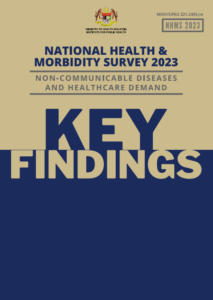
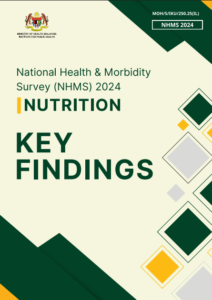
Meanwhile, findings from the National Health and Morbidity Survey (NHMS) highlight the nutritional challenges facing children and adolescents in Malaysia. The NHMS 2023 found that among adolescents aged 15–17, 16.7% were overweight or obese, while 14.7% experienced stunting. NHMS 2024 findings also point to ongoing nutritional challenges among children and adolescents.
If RMT is to reach more students while continuing to provide nutritious meals, funding needs to keep pace with both wider coverage and the cost of delivering the programme. Read our article on school food policies sini.
Investing in our teachers and school leaders
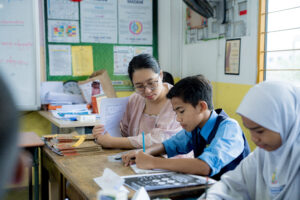
Teaching quality is one of the most important school-level factors influencing learning outcomes. Research also shows that effective teaching can help narrow achievement gaps, giving students from disadvantaged backgrounds a better chance to succeed. Improving teacher quality remains our best bet for breaking the cycle of education inequity.
In Belanjawan 2027, the allocation for in-service teacher training increases by 70% to RM33.25 million. Meanwhile, the allocation for pre-service teacher training remains broadly unchanged at RM569.68 million, while leadership training increases by around 10%, from RM88.17 million to RM97.04 million.
These increases are welcome and signal continued investment in the people at the heart of our education system. However, to put the in-service training allocation into perspective, with around 428,000 teachers nationwide, RM33.25 million works out to approximately RM78 per teacher per year. Of course, this is just a simple average, as funding may be concentrated on particular programmes or groups of teachers, and some teacher development activities may be funded through other allocations. Even so, are we investing enough in developing the teachers who shape how students learn every day?
We often focus on improving the education system’s ‘hardware,’ such as school buildings and facilities. Belanjawan 2027 allocates RM3.3 billion for school repairs, maintenance and upgrades. But are we giving the ‘software’ of the system — our teachers — the same attention? Even the best-equipped classroom can only go so far without a teacher who knows how to make the most of it. Like any professional, teachers need ongoing opportunities to update their skills and adapt their practice to changing needs.
Beyond increasing allocations, we must make every ringgit count. Under Teras Strategik 3, the RPM 2026–2035 calls for more structured, relevant professional development, along with stronger quality assurance for in-service teacher training. These steps are important to ensure professional development translates into improved classroom teaching practices. We need stronger mechanisms to evaluate the effectiveness of continuous professional development efforts, moving beyond tracking programme numbers and participation hours to focusing on how they actually strengthen teaching practice and improve student learning.
The Ministry can also work with external organisations to strengthen teacher capacity-building efforts. Initiatives such as Teach For Malaysia’s Fellowship and Program Duta Guru show how different approaches and partnerships can support educator development. Working with external partners, alongside strengthening the Ministry’s own systems and capacity, could broaden the range of support available to teachers and school leaders.
A stronger focus on early childhood education
 Early childhood is a critical stage in a child’s development, laying the foundations for future learning. In Belanjawan 2027, identifiable early childhood-related allocations within the Ministry of Education (MOE) total RM1.77 billion, a 45% increase since 2024. This reflects growing attention to early learning, in line with the direction set out in Rancangan Malaysia Ke-13, which includes introducing compulsory preschool education from age five and a national preschool curriculum.
Most of the RM1.77 billion goes towards operating preschool education, including staff salaries and day-to-day running costs. Belanjawan 2027 allocates RM1.54 billion for core preschool operations, RM142.07 million for preschool meals and RM23.19 million in per-capita grants. Meanwhile, development allocations include RM51.68 million for preschool education infrastructure and RM12.81 million for early childhood care and education.
However, these identifiable allocations account for only around 2.6% of MOE’s total budget. While early childhood-related funding may also sit under other ministries, it is still important to ask whether public investment is keeping pace with the government’s ambitions for early childhood education. UNESCO recommends allocating at least 10% of total education spending to pre-primary education, while UNICEF Malaysia recommends tagging child-related expenditure across the government’s budget to make it easier to identify and track spending on children across ministries. This would provide a clearer picture of how much is invested in children, where the money goes, and whether the spending translates into better care and outcomes for children.
Other notable allocations
Beyond these areas, Belanjawan 2027 includes several other notable allocations. Funding for Memartabatkan Bahasa Malaysia Memperkukuh Bahasa Inggeris (MBMMBI) rises by 57.6%, from RM128.03 million to RM201.71 million, while the allocation for curriculum development increases to RM58.5 million, in line with the rollout of Kurikulum Persekolahan 2027. Scholarship and sponsorship funding also rose by 27.1%, from RM477.46 million in the revised 2026 budget to RM607.03 million in 2027. The Government also plans to complete 3,500 additional classrooms ahead of the intake of new Year 1 students. Meanwhile, the Government allocated RM35.85 million to support the implementation of the RPM 2026–2035.
A Final Note
Belanjawan 2027 signals continued investment in Malaysia’s education system, from supporting students and families to developing teachers, strengthening early childhood education, and improving school facilities. However, funding allocations are only the starting point. What matters is how effectively these resources are spent, whether they reach the students, teachers and schools that need them most, and what difference they make to a child’s learning and development. That is how we move closer to a future where every child in Malaysia has the opportunity to realise their potential through quality education.