




On 20th January, Prime Minister Datuk Seri Anwar Ibrahim announced a set of sweeping education reforms at the launch of the Rancangan Pendidikan Malaysia (RPM) 2026–2035 and the Rancangan Pendidikan Tinggi Malaysia (RPTM) 2026–2035. Together, these two plans form the Rancangan Pendidikan Negara (RPN), Malaysia’s overarching national education framework for the next decade.
The vision of the RPM, Pendidikan Bermutu, Insan Terdidik, Negara Sejahtera, highlights the link between quality education and a thriving, prosperous nation. In his address, the Prime Minister emphasised the importance of education reforms to safeguard Malaysia’s future in a competitive world. In the 13th Malaysia Plan (RMK13), education is positioned as a key driver of social mobility and a critical lever for growth and national development. The RPM builds on the foundations laid by its precursor, the Pelan Pembangunan Pendidikan Malaysia (PPPM) 2013-2025, and carries forward some of the key education reforms outlined in RMK13.
Overview
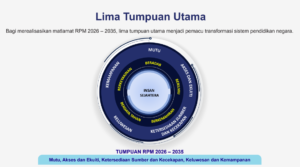
The RPM is also anchored on five focus areas: Quality, Access and Equity, Resource Availability and Efficiency, Flexibility, and Sustainability. The first three closely mirror the system aspirations outlined in the PPPM 2013–2025 and are timeless priorities that will remain central to any education system. With enrolment rates in Malaysia already high across different levels of education, access is now tied more closely to equity. Meanwhile, the inclusion of flexibility and sustainability reflects a response to emerging demands, technological developments and future needs. Sustainability is also a new strategic thrust in the blueprint. It remains to be seen whether its inclusion stems from clear strategic conviction or is largely driven by global trends.
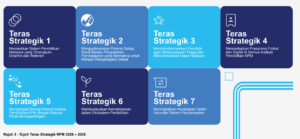
The RPM is driven by seven strategic thrusts that are organised around a specific theme or stakeholder, which are System, Student, Educator, Infrastructure and Infostructure, Synergy, Sustainability and Delivery. Framing the strategic thrusts this way makes it easy for different actors to pinpoint what’s expected of them, how they can contribute and benefit from the plan. Each strategic thrust is then further broken down into several strategies and initiatives.
The RPM takes a broader, more comprehensive system-level approach compared to the 11 shifts outlined in the PPPM 2013-2025, which were more targeted and combined strategic and operational levers. However, with so many initiatives outlined to implement within a decade, it may seem overly ambitious and unfocused to some. Therefore, effective implementation of the plan will require strong coordination among multiple actors, robust monitoring mechanisms and sufficient resourcing to ensure progress across all areas.
What’s New?
The plan includes a set of non-negotiable outcomes covering academic achievement, socio-emotional well-being, physical fitness, digital competence, bilingualism, critical and creative thinking, and equitable access to infrastructure, digital tools and support for students with special educational needs.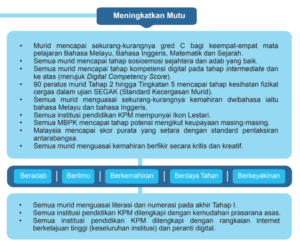 Together, these outcomes reflect the RPM’s strong emphasis on holistic student development as well as a shift towards broader, equity-driven student outcomes. However, these non-negotiables must also be carefully framed so that the focus of our education system goes beyond ensuring all students meet the minimum standards. As reflected in PISA 2022, Malaysia not only has a sizable proportion of students performing below proficiency, but also relatively few high-performing students. Therefore, the Ministry of Education will need to actively support both equity and excellence, ensuring that neither is compromised.
Overall, the RPM, coupled with the rollout of Kurikulum 2027 and the introduction of new assessments for Standard 4 and Form 3 students, reflects the government’s boldness in championing education reforms. The Prime Minister’s call to accelerate its implementation is a refreshing sense of urgency. However, navigating this effectively will require strong coordination, communication and capacity-building efforts. While a good plan is an important start, the real test lies in delivery. Implementation has long been a central challenge in Malaysia, a reality that has been highlighted by the Prime Minister and Ministry officials.
Are We Ready for Real Transformation?
The success of bold reforms depends on the readiness of the system and the people to embrace them. Besides channelling more resources and introducing new practices, the mindset, norms and culture of everyone, from ministry officials and teachers to parents and students, must also shift. Without this, reforms often get lost in translation and fail to achieve their intended outcomes. There is a need for a shared understanding of the goals and purpose of the reforms alongside a shift away from a culture of fear, compliance and unhealthy competition. In addition, clear and timely communication is also crucial.
The implementation of PPPM 2013–2025 also began with a strong mandate that mobilised different parties. However, this momentum gradually waned. Therefore, the mandate and continuity of the RPM must be sustained through political cycles, ministerial changes and transitions in senior leadership within the Ministry for the plan to drive lasting transformation. The Prime Minister’s instruction for monthly progress updates is a positive step, but these updates must continue consistently over time. In addition, the reports should also go beyond documenting achievements and activities to include analysis of what works, current challenges and lessons learnt. Making these reports publicly accessible would further enhance transparency and accountability as well as enable various stakeholders to make evidence-based decisions and support the Ministry’s efforts.
What are your thoughts on the Rancangan Pendidikan Malaysia 2026–2035? Stay tuned as we unpack the key reforms in upcoming in-depth analyses. Subscribe to our newsletter and follow our social media channels.
—
Many look for change. Most wait for it. Few create it.
As Malaysia prepares to roll out a new education blueprint to shape the future of education, Teach For Malaysia is calling for our most promising Malaysians to step forward and lead change in classrooms across the country for its 15th Fellowship Cohort.
Applications for the Teach For Malaysia Fellowship are now open.Apply at: teachformalaysia.org/fellowship




One Comment