

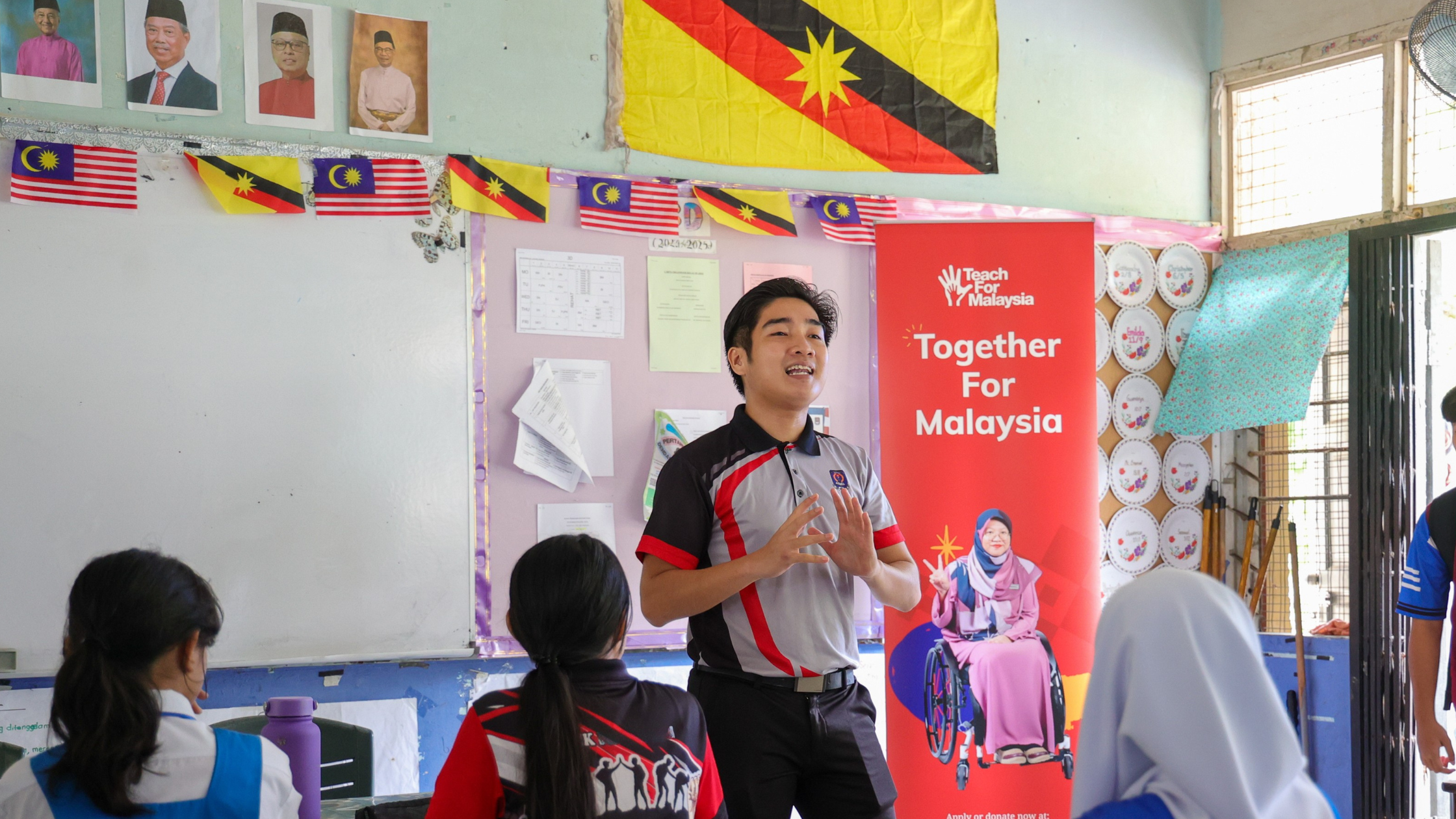

Sarawak Day is celebrated annually on 22nd July. It marks the day in 1963 when Sarawak gained self-government from British colonial rule – a major milestone in the state’s history before officially joining Malaysia later that year. Each year, Sarawakians commemorate this occasion through parades, cultural performances, and community events that celebrate Sarawak’s identity and history. But Sarawak Day isn’t just about remembering the past; it’s also a moment to reflect on how Sarawak continues to shape its future.
Under the Malaysia Agreement 1963 (MA63), Sarawak was granted autonomy in key areas, including education. While the education system remains centralised under federal oversight, Sarawak has increasingly asserted greater influence and leadership in shaping education policy and delivery that reflect its unique needs. Notably, Sarawak has its own Ministry of Education, Innovation and Talent Development (MEITD), and several bold education initiatives have been introduced in recent years. Let’s take a look at some of them!
Key Education Initiatives in Sarawak
Free Tertiary Education Scheme (FTES)
Starting in 2026, Sarawak’s Free Tertiary Education Scheme (FTES) will offer tuition-free undergraduate education at four state-owned institutions: Swinburne Sarawak, Curtin Malaysia, University of Technology Sarawak (UTS), and i-CATS University College. The scheme includes 64 approved programmes in STEM, medicine, law, accounting, and finance. This move represents a bold, equity-driven investment to build a skilled and future-ready workforce. Beyond waiving tuition fees, FTES also provides a RM15,000 annual stipend to students from low-income households (≤ RM1,500 per capita/month), removing a significant barrier to participation for underserved communities. To date, the scheme does not include any formal service bonds.
FTES is a positive step in expanding access to tertiary education in Sarawak, particularly in a state where UNIMAS and UiTM are currently the only public universities. However, strengthening support mechanisms such as mentorship, career guidance, and wellbeing services, especially for first-generation university students, must also go hand in hand. Meanwhile, social and geographic inequalities may persist if rural or marginalised students are not sufficiently informed, encouraged, or supported to access the opportunity. Therefore, targeted outreach and demand-side initiatives will be key to ensuring that FTES promotes access and equity.
Some concerns have also been raised around whether Sarawak’s job market can absorb the potential influx of graduates, particularly in high-skilled roles, and whether underemployment or brain drain may become future challenges. Others have cautioned against a tendency to overemphasise technical fields, which could channel too many students into select areas at the expense of disciplines like the arts, humanities, and social sciences.
Once the scheme is implemented, it will be essential to track participation, accessibility, and post-graduation outcomes to understand its long-term impact and assess whether it truly makes a difference for those who need it most.
Sarawak Education Enhancement Programme
Launched in April 2025, the Sarawak Education Enhancement Programme (SEEP) is a targeted intervention to lift academic outcomes and address educational disparities between urban and rural schools. Key goals include improving the state’s average SPM grade, increasing enrolment in pure science classes, and strengthening the talent pipeline. The programme targets Form 3 to Form 5 students who are low-performing and/or from low-income households, while all Science stream students are eligible to enrol. SEEP provides free in-school tuition, webinars, and workshops to boost learning outcomes in English, Science, Mathematics, History and pure Science subjects.
The programme is structured with clear guidelines and comprehensive resources, including subject modules, teacher allowances, teaching material allocations, and monitoring and evaluation plans to support its implementation. As SEEP is new, its effectiveness is yet to be determined. However, early feedback from educators indicates challenges in student attendance, suggesting a need to better understand and address underlying barriers. In some cases, foundational skills in literacy and numeracy may need to be addressed first before students can fully benefit from the programme.
Statewide Dual-Language Programme & Assessment
Since 2020, Sarawak has implemented the Dual Language Programme (DLP), where Science and Mathematics are taught in English across all national primary schools. Based on a federal circular, Sarawak was allowed to bypass the usual school-by-school application process and secured blanket approval for statewide implementation. The rollout began uniformly with Standard 1 students in 2020 and has since expanded to public secondary schools. Sarawak’s DLP is fully state-funded, with the MEITD working closely with the Jabatan Pendidikan Negeri Sarawak (JPNS) to train teachers, publish guidebooks and activity books, provide learning materials and conduct school support visits.
While the DLP rides on the national Memartabatkan Bahasa Malaysia dan Memperkukuh Bahasa Inggeris (MBMMBI) policy, its implementation in Sarawak is also facilitated by the state’s unique socio-political and historical context. English-medium education continued in Sarawak well into the 1980s, and English is still one of Sarawak’s official languages alongside Malay. Therefore, there is less resistance towards the programme. Additionally, a subset of senior teachers still in the system were once trained or taught in English, easing the transition in terms of teacher proficiency. This foundation, along with state-level ownership and investment, has enabled the rollout, though there remain calls for greater on-the-ground support for teachers and students.
In 2025, the first DLP cohort will be in Year 6 and will sit for the newly introduced Ujian Penilaian DLP Sarawak (UP-DLP Sarawak) – a standardised examination for Science, Mathematics, and English. Set for October, the exam measures subject mastery and English proficiency, with papers vetted by the Cambridge University Press and Assessment (CUP&A). Future plans include extending it to Form 3 students. The assessment serves as a tool to monitor the effectiveness of DLP implementation across schools. While some welcome UP-DLP as a consistent benchmark of student progress following the removal of UPSR and PT3, others are concerned it may lead to exam-oriented teaching and learning.
Yayasan Sarawak International School
Yayasan Sarawak International Secondary Schools (YSISS) is operated and funded by the state government. Using the IGCSE curriculum, it aims to equip students with globally benchmarked, high-quality education while remaining rooted in local values and context. YSISS was first established in 2022 with a campus in Petra Jaya. More campuses have been added in Kuching and Sibu, and new ones are expected in Bintulu and Miri by 2027.
To be eligible, students must have at least one Sarawakian parent, a minimum Band 5 in Bahasa Melayu, English, Science, and Mathematics, and pass the YSISS entrance exam. Those from B40 households are granted full scholarships, while the fees for other students are heavily subsidised.
The initiative is a promising step in expanding access and offering parents and students greater choice in the kind of education they seek. It also aligns with Sarawak’s ambition to build a globally competitive talent pipeline and complements the Free Tertiary Education Scheme. However, while the IGCSE curriculum provides international recognition, some have questioned its academically-centric nature and whether there will be adequate teacher supply and quality to deliver it effectively.
Moreover, while the prioritisation of B40 students is commendable, concerns have been raised about post-secondary pathways, particularly whether students from international schools may face challenges navigating public university admissions via the UPU system. The expansion of YSISS could also create ripple effects across the broader public education system. Some worry it may divert attention and resources from efforts to strengthen the quality of national schools for all. While the initiative may broaden access for selected students, it also risks reinforcing existing inequities if not carefully managed.
Holistic Support from Cradle to Campus
The state has also rolled out practical support for students through cash aid, laptops, and book vouchers for tertiary students from low-income families, alongside RM2.5 million in preschool fee subsidies and RM14 million in grants to early childhood centres. These initiatives alleviate families’ financial burden and enable students to stay engaged from early years to university. The approach reflects a clear belief: real access means supporting students at every stage. The provision of affordable education alone isn’t sufficient — it must be supported by targeted interventions that ensure students can fully participate, engage, and thrive throughout their learning journey.
Looking Ahead
Sarawak is piloting bold ideas across the education continuum — from free tertiary education and in-school tuition support to dual-language instruction and affordable international school options. While many initiatives are still in their early stages and will require continuous refinement, they reflect a clear commitment to talent development and a future-facing education agenda. The real measure of success will lie in their long-term impact and how equitably they benefit different communities.
It also raises the question: can or should other states follow suit? While the vision is compelling, replication is far from straightforward. Sarawak’s ability to act independently and invest at scale is underpinned by sound financial mechanisms, long-term planning, and a strong political commitment that recognises education as central to the state’s development.
Still, Sarawak offers valuable lessons. It shows what can be done when education is prioritised as a lever for development. What do you think of Sarawak’s education initiatives?



 MY
MY  ENG
ENG